Worksheet for Module 7
1) What was The Great Dying? Cite examples and details from the historical record in your response. Could this be considered a genocide? Why/ why not?
P.557 Introduces the Great Dying which was illnesses and disease brought to the new world by foreigners tot he native people. In densely populated Central Mexico with the Nahuatl people amassing 10 to 20 million before Spanish conquest had decimated the civilization down to 1 million (p.559).
Yes, this was genocide! Even though it was not a product that was brought by the Spanish to control, they were aware of the natural interactions that they were bringing with them and used that to the best of their ability. The textbook called it "The Columbian Exchange", biological warfare we could say to the native people fo the Americas. Spaniards were in few numbers, rarely did they have reinforcements, but they sure knew what death blowing illnesses they would bring with themselves and European wildlife and stock.
2) What did native Siberians and native Americans have in common in terms of their experiences with Europeans during the early Modern period?
P.568 Caribbean Colonies - were the new competition to the Arabs in Large-scale sugar production. Fertile farmlands, isolation, controlled workforce, and a large supply of laborers (p. 569 African slaves) converted fertile soil into massive farming production and refineries to outsource Arab producers int he Meditteranean.
P. 573 Siberians - nomadic pastoral people were the first to be conquered by Russians. Having been recently ruled by the Mongol Empire, Russians continued suit with the behavior, taxation, and converting pastoral land fo grassing (the Siberian way of life) into agricultural farmlands to feed the masses of the newly developing Russian empire.
3) Discuss the history and impact of the Indian Ocean trade network (the Sea Roads) from the Classical to Modern periods.
Historically, Sea Roads stemmed from Asia to Africa. The Classical Ea encompassed monsoon winds that drove the fleets to and from Asia to Africa.
In the Modern Era, Sea Roads were navigated with large armed vessels with superior technology and naval advancements from European design and the coalition of Trading Companies governing and taxing all thoroughfare and goods.
4) Look at the pie chart titled “The Destinations of Slaves” on page 627 of our textbook. What might people find surprising about the percentages of slaves who disembarked in different parts of the Americas?
The largest two populations were slaves to Brazil, followed by slaves to the Caribbean.
What factors explain why the percentages were this way?
P. 568 - 569 Resources and fertile soil control the destination fo these large slave populations. The ease of producing, the right soil, the right climate maximized the efforts of large-scale production in agriculture and natural resources
5) What does Strayer mean by the “echoes of Atlantic Revolutions”? Cite examples and details from the historical record in your response. Are the Atlantic Revolutions still echoing in the 21stCentury?
One of the earliest regions to start a revolution was in Saint Dominique (later named Haiti) in 1791-1804 on P. 709. Regarded as the richest colony in the world, boasting a slave workforce of 500,000. The colony had a class system that kept the wealthy, wealthy, and everyone else poor. The ruling class was viciously dethroned by the black army (slaves) and their own white (poorer class) in a financial strick to France. This act echoed throughout the old worlds of Europe, Mediterranean, Asia, and all outlying colonies in the Americas. This act of revolution might be considered the spark that fueled a change in thought from ruled lands to take arms and think for themselves with new ideas and leadership.
6) What did feminists and abolitionists have in common? How and why did they sometimes work together?
Fare and Just treatment. Both factions sought liberty and equality (P.715), to show how a group can overcome and excel when given the opportunity was one of their concepts. To no longer be oppressed, no longer be ignored, and to be given the right to choose for themselves. Allowing self-minded individuals to think, education, and create would allow an enhancement into society with a different point of view (P.723).
8) What was the Industrial Revolution? Where and when did it begin? Discuss its long-term significance to people, cities, and the planet.
P.738 Industrial Revolution was an advanced period that humans began to find new methods to use renewable energy since the limits of unrenewable fuels like coal were now at the limit due to population exploding from 375 million in 1400 up to 1 billion in the early nineteenth century.
Long-term significance was to improve on the modern comforts of the home and bring that to a larger scale to companies, businesses, manufacturing whilst trying to expand and improve city dwellings with cleaner and more productive technology. These improvements for the people and living in cities will all the planet to recuperate from the usage of nonrenewable fuel sources and help clean up the environment.
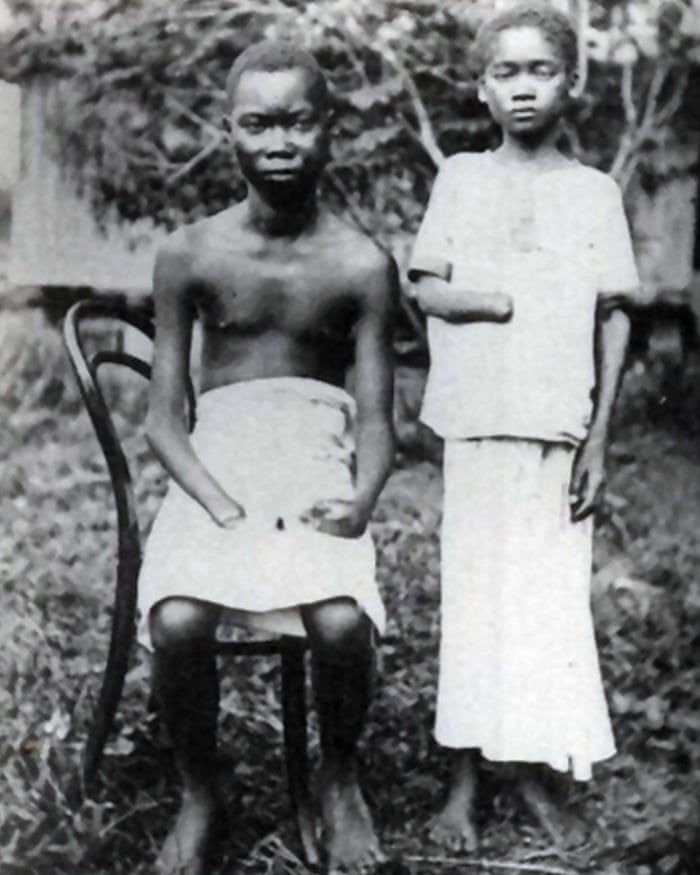
9) Chapter 18 contains some powerful images. Why do you suppose Strayer chose to include these specific images? How do they illustrate concepts introduced in this chapter? Choose one image and a) describe it, b) explain how it illustrates a concept from the chapter, and c) give your general thoughts about the image, as you might do in the context of a small in-class discussion group. The images you can choose from are (your version of the textbook may use different titles and page numbers):
An American View of British Imperialism (p.790)
European Racial Images (p.791)
Map 18.2 Conquest and Resistance in Colonial Africa (p.796)
Colonial Violence in the Congo (p.803)
The Educated Elite (p.815)
Colonial Violence in the Congo (p.803)
The image on p. 803 was two young boys that were mutilated as a punishment since the villagers were unable to supply the wild rubber quota. This was a common practice under the Power of the State. Immediate and swift harsh punishments fell to those who did not perform to the standards of the governing body.
Greed, corruption, and distance were the factors that allowed the Power of the State to be unchecked. Fortunately, these horrible images and stories were publicized forcing European countries to take action.
REMEMBER, QUESTION 10 SHOULD BE IN A SEPARATE BLOG POST (BECAUSE YOU WON’T BE ABLE TO COMPLETE IT UNTIL YOU’VE READ SOMEONE ELSE’S ANSWER TO QUESTION 9)
10) Find a classmate’s posting for Question 9. How would you respond to your classmate’s comments if you were participating in an in-class small group discussion about the image?